
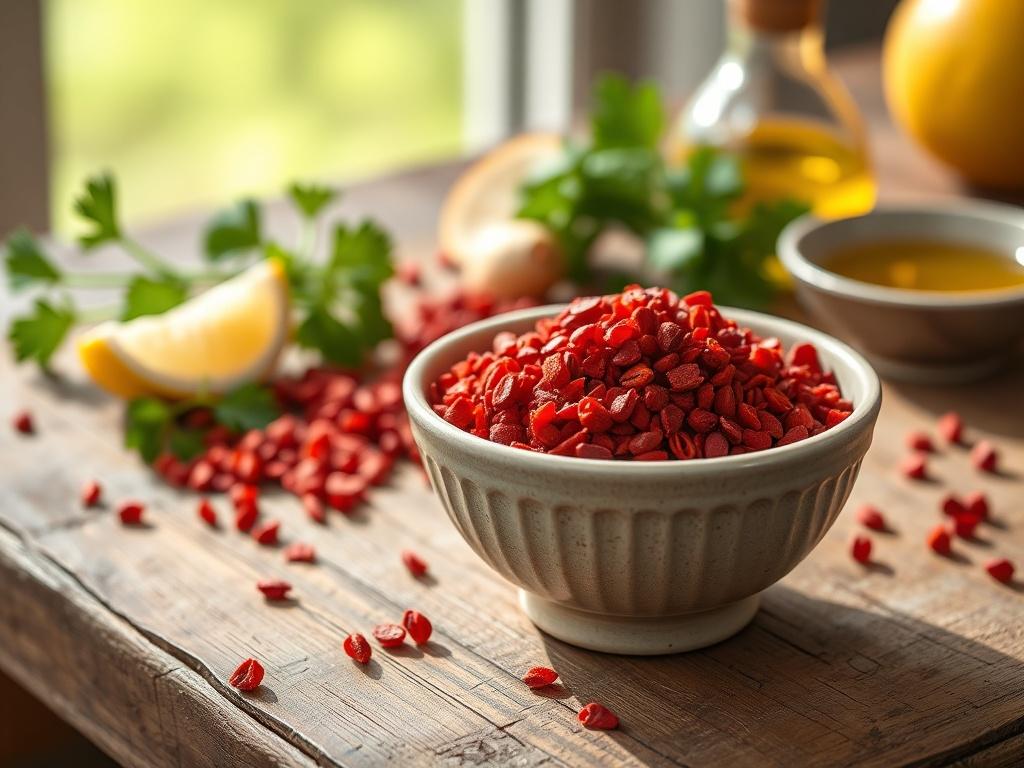
Sumac is a vibrant crimson spice made from the dried and ground berries of the wild sumac shrub, bringing a unique and lively essence to dishes across the Middle East, Turkey, and the Mediterranean. This spice, with its stunning ruby-red hue, offers a refreshingly sour taste that is slightly fruity and subtly astringent. Gourmets and home cooks alike cherish sumac for its ability to brighten flavors, often replacing lemon juice or vinegar in various recipes. With its presence in everything from grilled meats to fresh salads, sumac not only enhances the culinary experience but also adds a lively pop of color.
Incorporating sumac into your dishes elevates the sensory experience, providing a tantalizing twist that excites the palate. Its versatility shines in classic combinations, such as za'atar blends and Persian cuisine, where it pairs beautifully with an array of ingredients. As we explore the allure of this ancient spice, you'll discover how sumac embodies the captivating flavors of sun-drenched hillsides and serves as a delightful addition to every meal. Join us as we delve deeper into the culinary significance and delicious applications of sumac, celebrating its tangy richness that continues to charm food lovers around the world.
Discover the allure of sumac: A vibrant spice for the senses
Sumac captivates the culinary world with its vibrant crimson hue and distinct flavor profile. Made from the dried and ground berries of the wild sumac shrub, this spice offers a refreshing burst of sourness that brightens even the simplest of dishes. When you sprinkle sumac onto your meals, you not only enhance the taste but also add a visual appeal that is hard to ignore. Its stunning ruby-red color evokes the image of sun-drenched hillsides, making every dish feel like a culinary celebration of nature's bounty.
As you explore the wonders of sumac, you will discover that it’s more than just a spice; it's an experience for the senses. The tart, lemony tang of sumac stands out in a world saturated with more common flavors, creating an exciting alternative to traditional lemon juice or vinegar. Its refreshing sour notes intermingle with a slightly fruity undertone, creating a flavor that dances on your palate. Whether you are an adventurous home cook or a seasoned chef, incorporating sumac into your cuisine will take your dishes to new heights and invite your guests to savor the unique taste of this ancient spice.
Elevate your dishes with sumac's tangy richness
Sumac is a versatile spice that effortlessly transforms a variety of dishes with its unique flavor profile. The vibrant crimson hue of sumac adds an appealing visual touch, making your meals not only tastier but also more attractive. A simple sprinkle of this tart, lemony seasoning can elevate grilled meats, enhancing their savory notes, while offering a refreshing contrast. Additionally, it shines in fresh salads, where its zesty notes complement crisp vegetables and bright dressings. Even humble rice dishes take on a new life when kissed by sumac’s tangy richness, lifting them from ordinary to extraordinary.
Beyond its role as a flavor booster, sumac serves as a healthier alternative to more traditional acidic components like lemon juice or vinegar. Its natural sourness lends a depth of flavor without overwhelming dishes, allowing the other ingredients to shine through. For those exploring culinary creativity, incorporating sumac into your cooking routine is an excellent way to add a touch of boldness and complexity. Whether you are sprinkling it over hummus, draping it across flatbreads, or using it to accentuate roasted vegetables, sumac’s vibrant taste can invigorate your culinary repertoire and invite your palate on a delightful journey.
The culinary significance of sumac in Middle Eastern and Mediterranean cuisine
Sumac holds a revered place in the kitchens of the Middle East and Mediterranean regions, where it enhances a variety of traditional dishes. Chefs and home cooks alike sprinkle this vibrant crimson spice over grilled meats like kebabs and roasted vegetables, transforming simple fare into culinary masterpieces. It brings out the natural flavors of ingredients, making it an essential companion for fresh salads and dips, particularly the beloved hummus. The tart, lemony tang of sumac creates a unique balance that elevates dishes, making them even more enticing to the palate.
In addition to its role in individual dishes, sumac proves indispensable in various spice blends, most notably Za'atar, which combines sumac with herbs like thyme, oregano, and sesame seeds. This blend infuses a delightful zest into flatbreads, offering a taste that transports diners to sun-drenched markets and bustling kitchens. Persian cuisine, too, features sumac prominently, utilizing its distinctive flavor to accentuate rich rice dishes and savory meats. Overall, sumac enriches the culinary landscape, offering a taste of tradition that resonates through generations, uniting countless dishes with its zesty essence.