
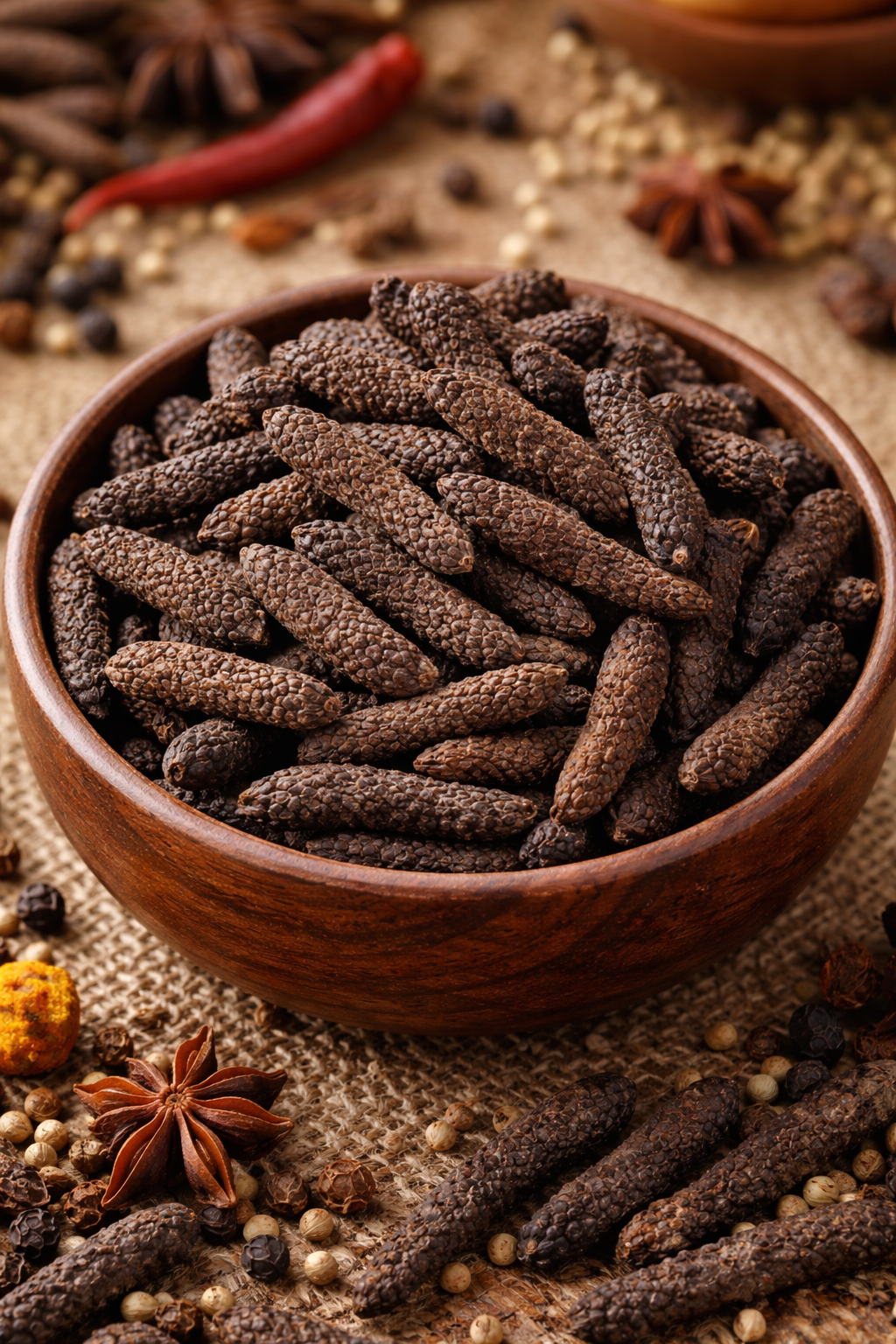
Pipli, also known as Indian long pepper, captivates the senses with its aromatic charm and complex flavor profile. This intriguing spice, derived from the dried, spike-like fruit of the Piper longum plant, boasts a unique heat that intertwines sweetness with earthy notes reminiscent of ginger, cardamom, and nutmeg. As a cherished ingredient in Ayurveda, pipli is celebrated for its warming and digestive properties. Once a staple in ancient Indian and Roman kitchens, this slender, pinecone-shaped spice has a rich history that connects modern culinary practices to the time-worn spice routes of antiquity.
In our exploration of pipli, we will delve into its culinary magic, showcasing how this versatile ingredient enhances traditional dishes—from robust meat kebabs to flavor-packed spice blends and pickles. We’ll also uncover the ancient wisdom of pipli, highlighting its significant medicinal benefits that have been revered for centuries. Join us on this flavorful journey to discover the aromatic delight of pipli, and learn how it can elevate your cooking while honoring a rich culinary heritage.
Discovering pipli: The aromatic delight of Indian long pepper
Pipli, also known as Indian long pepper, captivates chefs and home cooks alike with its unique flavor profile. This dried, spike-like fruit of the Piper longum plant stands as a testament to the rich culinary heritage of India. With a taste that intertwines elements of ginger, cardamom, and nutmeg, pipli offers a more intricate and earthy heat compared to its more commonly known cousin, black pepper. The slender, pinecone-shaped spice not only adds warmth to dishes but also sparks curiosity among those eager to explore the depths of traditional Indian cooking. Its aromatic allure draws attention, enticing the senses and inviting experimentation in the kitchen.
In ancient times, pipli enjoyed great popularity, often gracing the kitchens of both Indian and Roman households. Chefs valued this spice for its ability to elevate the flavor of stews, lentil dishes, and warming beverages, creating delightful layers of taste and warmth. The gradual, slow-building heat of pipli offers a whisper of history, connecting modern dishes to the spice routes of antiquity. As culinary enthusiasts seek to revive forgotten ingredients, pipli stands out as a key player, urging a resurgence of flavors and techniques that celebrate the art of cooking with spices. The return to this aromatic gem tells a story of cultural significance and culinary diversity that resonates with both the past and the present.
The culinary magic of pipli in traditional dishes
Pipli, the aromatic Indian long pepper, adds a unique depth to a variety of traditional dishes. Chefs and home cooks alike appreciate its complex flavor, which beautifully enhances spice blends and pickles. When used in meat dishes like kebabs, pipli infuses the proteins with its warm, earthy heat, transforming each bite into a flavorful experience. Its slow-building warmth complements rich gravies and stews, encouraging a harmonious balance among the other spices. From the bustling kitchens of Indian households to gourmet restaurants, pipli continues to enchant food lovers with its distinctive profile, often underrated yet incredibly versatile.
In vegetarian fare, pipli elevates lentil dishes and vegetable curries, making them not only more scrumptious but also more nutritious. It plays a starring role in many traditional preparations, adding a subtle but profound character that lingers on the palate. With its intriguing notes of ginger, cardamom, and nutmeg, pipli enriches warming beverages, creating cozy elixirs perfect for chilly evenings. By incorporating pipli into everyday cooking, we can rekindle a connection to ancient culinary traditions, reminding us that this slender spice has stood the test of time in flavor and health benefits.
Unveiling the ancient wisdom: The medicinal benefits of pipli
Pipli, or Indian long pepper, has occupied a revered place in Ayurvedic medicine for centuries. Practitioners have long valued its warming properties, attributing various health benefits to this versatile spice. Traditionally, pipli aids digestion and enhances the absorption of nutrients, making it an essential ingredient in many medicinal preparations. Its potent bioactive compounds, such as piperine, play a crucial role in promoting respiratory health, providing relief from coughs, colds, and other ailments. In Ayurveda, it's often combined with honey and other herbs in formulations like kadhas, which strengthen the immune system and support overall wellness.
Moreover, pipli holds significance beyond its digestive and respiratory benefits. This aromatic spice possesses anti-inflammatory and antioxidant properties, which can contribute to overall health and vitality. Many herbal concoctions, including chawanprash, incorporate pipli for its ability to balance the body's energies and rejuvenate the system. The slow-building warmth of pipli not only enhances flavor but also encourages circulation, making it a powerful ally during colder months. By embracing pipli in modern wellness practices, individuals can tap into a rich tapestry of ancient knowledge, rediscovering a holistic approach to health that connects us to our culinary heritage.