
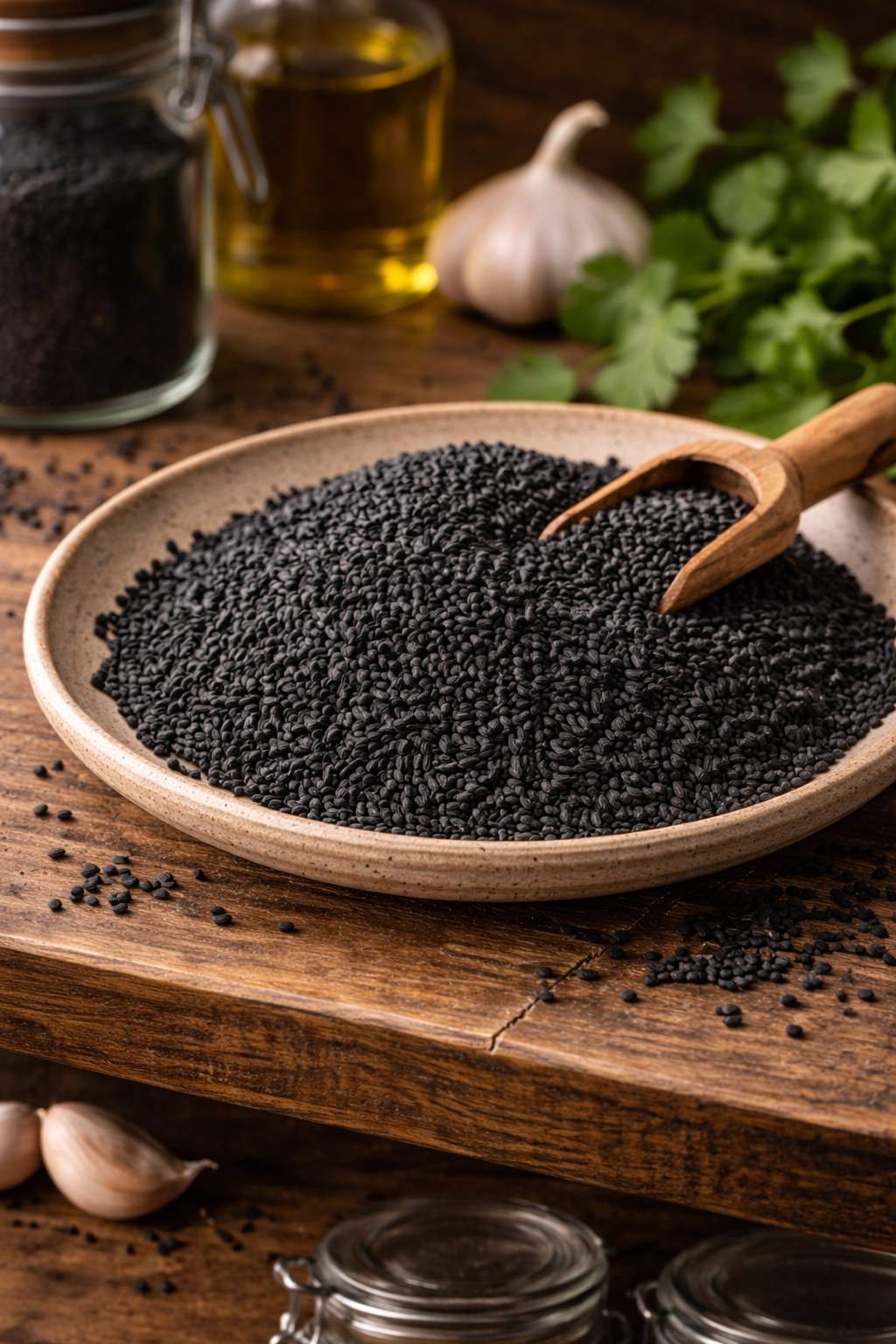
Welcome to the remarkable world of kalonji, also known as nigella seeds. These tiny, matte-black seeds pack a punch with their complex flavor profile, offering earthy, slightly bitter notes interwoven with aromas reminiscent of onion, oregano, and pepper. Often mistaken for black sesame or black cumin, kalonji has found a beloved place in the kitchens of South Asia, the Middle East, and North Africa. Whether dry-roasted or tempered in oil, these potent seeds unleash their fragrant essence, transforming everyday dishes and bringing a unique twist to traditional recipes.
Join us as we explore the culinary delights that kalonji has to offer. From crowning naan breads and elevating pickles to deepening the flavors of curries and dals, these powerful seeds can elevate any dish. Beyond their culinary versatility, kalonji holds a significant place in herbal traditions, celebrated as a seed of blessing that supports wellness and vitality. In this blog post, we’ll delve into the fascinating flavor profile of nigella seeds, share creative ideas for incorporating them into your cooking, and celebrate their enduring legacy in both health and culture.
The remarkable world of kalonji: Exploring the unique flavor profile of nigella seeds
Kalonji, or nigella seeds, captivate the senses with their intriguing combination of earthy tones and subtle bitterness. These tiny, matte-black seeds not only possess a dramatic angular shape but also offer a complex flavor profile that surprises even the most seasoned palate. When you first taste kalonji, you may notice a hints of onion, oregano, and pepper that dance on the tongue, fully showcasing their aromatic qualities. Often confused with black sesame or black cumin, kalonji stands out through its unique flavor that adds depth to countless dishes and resonates with diverse culinary traditions.
As you dive deeper into the remarkable world of kalonji, you begin to appreciate its versatility in various cuisines. In South Asian, Middle Eastern, and North African dishes, these potent seeds play a vital role, enhancing flavors and aromas. Whether dry-roasted or tempered in oil, kalonji releases a fragrant, pungent essence that permeates the food it's paired with. Cooks often sprinkle these seeds over naan bread, incorporate them into pickles, or fold them into curries and dals, transforming everyday meals into extraordinary culinary experiences. When you explore the captivating flavor of kalonji, you unlock a world of possibilities that elevate your cooking to new heights.
Culinary delights: Creative ways to use kalonji in your cooking
Kalonji, or nigella seeds, add a distinctive flair to a variety of dishes, making them an essential component in many culinary traditions. You can elevate the flavor of homemade naan by scattering these tiny, matte-black seeds atop the dough before baking, creating a beautiful and aromatic bread. They enhance pickles by adding a complex flavor that balances the tanginess, while curries and dals benefit from their earthy undertones, deepening the overall taste profile. Simply dry-roasting kalonji for a few minutes before adding them to your dishes brings out their pungent essence, ensuring that every bite bursts with flavor.
In addition to traditional uses, kalonji shines in modern culinary creations. Sprinkle these seeds over salads and cheeses for an unexpected twist, as their subtle notes of onion and oregano complement various ingredients beautifully. You can experiment with kalonji in dressings or marinades, infusing your dishes with aromatic flair that tantalizes the taste buds. The potential for incorporating nigella seeds into your cooking is vast, and whether you’re using them as a garnish or a key ingredient, they promise to deliver depth and complexity to your meals.
The enduring legacy of kalonji: Celebrating its health benefits and cultural significance
Kalonji, or nigella seeds, boast a rich history steeped in cultural significance and health benefits. Revered for centuries, these tiny seeds are often referred to as the seed of blessing and appear in ancient texts and traditional remedies across various cultures. From the time of the Pharaohs in ancient Egypt to the renowned herbal doctors of traditional Indian medicine, kalonji has secured its place in the annals of herbal lore. This esteemed seed is believed to offer a wide array of health benefits, including antioxidant, anti-inflammatory, and antimicrobial properties, leading many to incorporate kalonji into their daily wellness routines. As people increasingly seek natural remedies, kalonji has gained popularity not just as a culinary ingredient but also as a holistic ally.
Kalonji's cultural significance extends beyond its health benefits; it plays a vital role in culinary traditions across South Asia, the Middle East, and North Africa. In many households, these seeds have become a staple, reflecting regional flavors and culinary heritage. The practice of using kalonji in festive dishes and everyday meals highlights its importance in communal dining and family gatherings. Additionally, kalonji symbolizes resilience and vitality, embodying the age-old belief that strength can come in small packages. As contemporary cooks and health enthusiasts rediscover kalonji, they not only embrace its unique flavor but also honor the cultural legacy and history embedded in these remarkable seeds.