
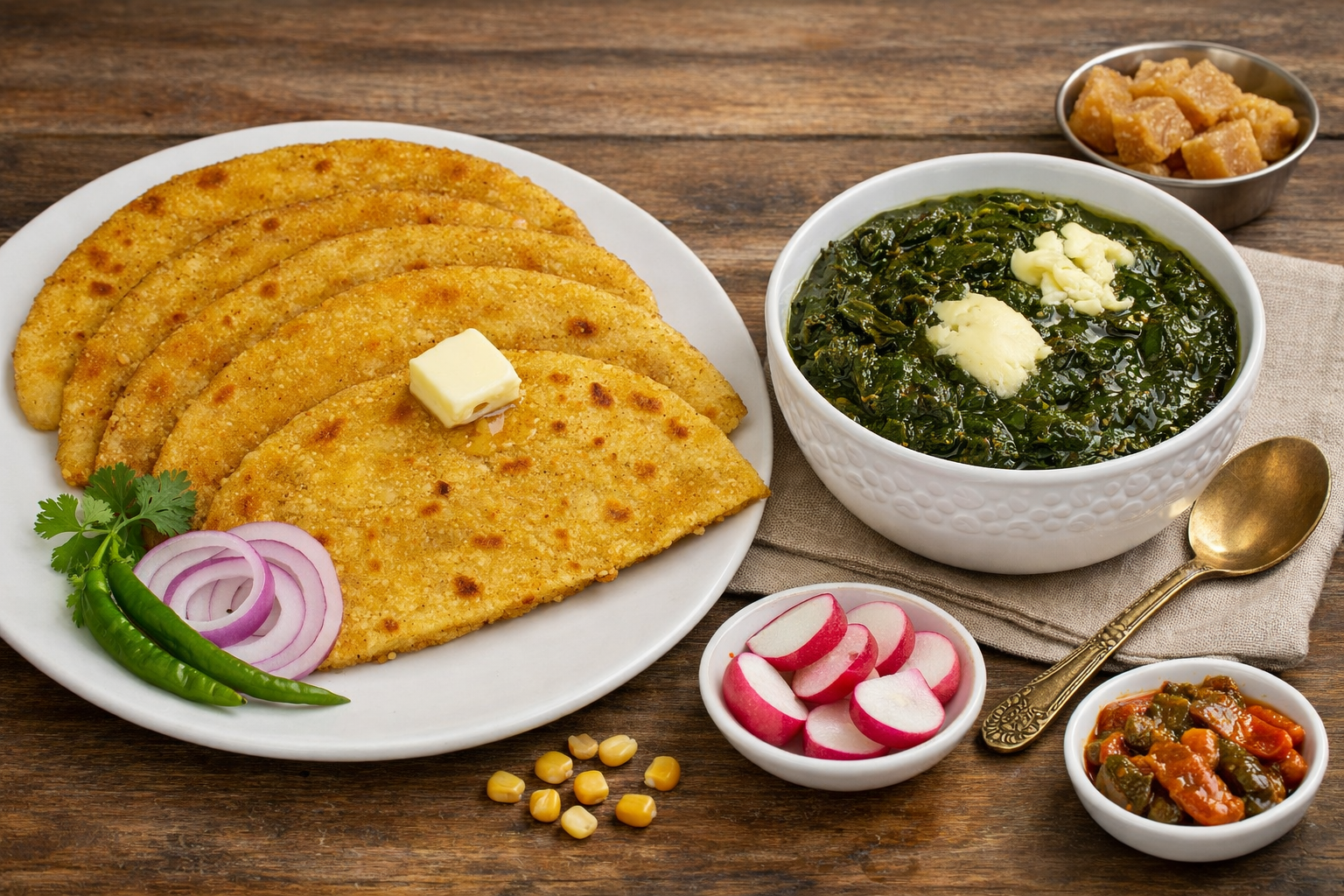
Makai Ki Roti, a cherished cornmeal flatbread, warms the hearts and bellies of many, especially during the winter months. This delightful dish pairs beautifully with Sarson ka Saag, a rich and flavorful mustard green preparation that enhances the rustic charm of the roti. The cold weather brings a unique comfort, making the combination of makai ki roti and sarson ka saag a seasonal favorite in many homes. Its savory essence and nutritional value make it a must-try for anyone looking to indulge in traditional Punjabi cuisine.
However, while makai ki roti may seem simple, achieving the perfect texture and flavor can be a little tricky. The unique properties of cornmeal require a keen understanding and a gentle hand in preparation. In this blog post, we will explore why makai ki roti is a winter staple accompanied by sarson ka saag, delve into the intricacies involved in making it, and provide you with helpful tips to master the art of preparing this delicious flatbread. Whether you're a seasoned chef or a curious home cook, these insights will ensure you create a standout dish that celebrates the season.
Why makai ki roti is a winter favorite paired with sarson ka saag
Makai ki roti, a delightful cornmeal flatbread, holds a special place in Punjabi cuisine(Pakisan, India ), especially during the winter months. Its rustic flavor and hearty texture make it the perfect companion for sarson ka saag, a rich and flavorful dish made from mustard greens. The combination warms the soul and provides essential nutrients to combat the chill of the season. Families come together to enjoy this wholesome meal, creating cherished memories around the dining table, highlighting why makai ki roti has become a winter staple in many households.
The simplicity of makai ki roti paired with sarson ka saag also speaks volumes about the agricultural bounty of the region. Corn, which is the primary ingredient in the roti, thrives in the colder months, making this flatbread a seasonal delight. When served hot off the tava (griddle) with a dollop of butter or desi ghee on top, makai ki roti becomes an irresistible treat. This classic combination not only satiates hunger but also warms the heart, making it a beloved winter dish that everyone looks forward to during the chilly days.
Understanding the intricacies of making perfect makai ki roti
Making perfect makai ki roti requires careful attention to the ingredients and techniques involved. Start with quality cornmeal, which forms the base of this delicious flatbread. Opting for fresh, finely ground cornmeal makes a significant difference in the texture and flavor. Combine the cornmeal with warm water, and knead it well to ensure a pliable dough. This step is crucial as it affects the roti's ability to puff up during cooking. Aim for a dough that is neither too dry nor too sticky, as the right consistency will lead to better shape and texture.
Another essential aspect is the rolling technique. Unlike wheat flour, cornmeal tends to crack if rolled too thin or too thick. Dust your rolling surface and the dough with a little dry cornmeal or flour to prevent sticking. Take your time to roll each piece evenly to about a quarter-inch thick. When placing the roti on the tava or skillet, keep the heat moderate. Cooking it on too high a flame can lead to uneven cooking or burning. By mastering these intricacies, you can elevate your makai ki roti and enjoy a delightful winter dish that perfectly complements the rich flavors of sarson ka saag.
Helpful tips to master the art of preparing makai ki roti
Making makai ki roti can be a delightful yet challenging experience, but with some handy tips, you can perfect this traditional flatbread. First, ensure you use fresh cornmeal for the best flavor and texture. Mixing the cornmeal with warm water is essential, as it helps in achieving a pliable dough. Knead the dough until it becomes soft and smooth; this will make rolling out the roti much easier. Allow the dough to rest for at least 15-20 minutes, which helps in gluten development and improves the final product's elasticity.
Next, the rolling technique plays a vital role in making a perfect makai ki roti. Use a clean, floured surface to roll out your dough. Instead of using a rolling pin, some prefer to press the dough with their hands, which keeps the thickness uniform. If the dough sticks, dust it lightly with more flour to prevent tearing. Cook the roti on a hot tawa or griddle, applying gentle pressure with a spatula to encourage even cooking. Finally, serve the roti hot with sarson ka saag to enjoy a hearty winter meal that truly celebrates the flavors of the season!