
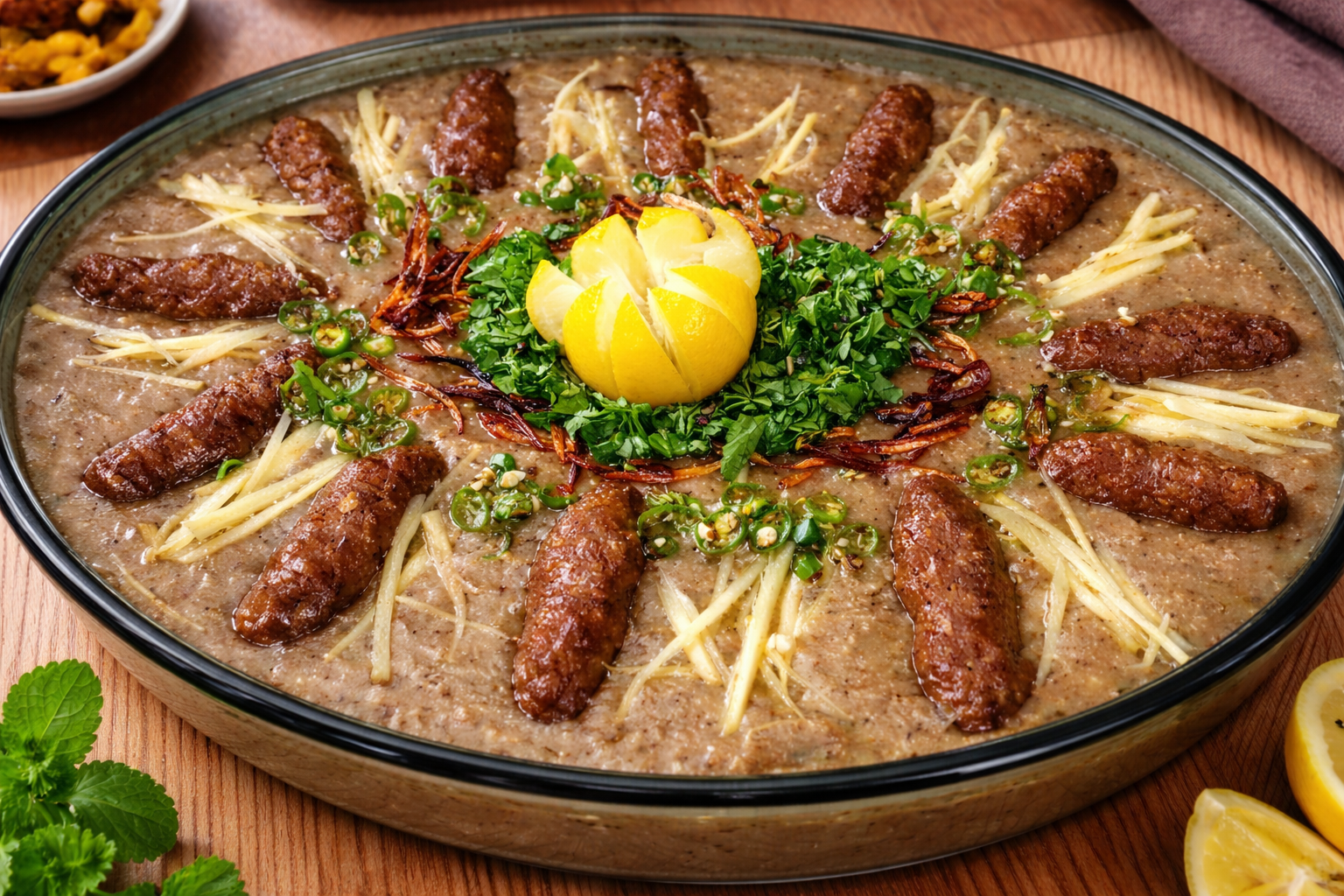
In the valley of Kashmir, where snow-capped peaks meet lush meadows, there exists a culinary masterpiece that warms both body and soul: Hareesa. This isn't merely a dish—it's a cultural institution, a winter tradition, and a testament to the art of slow cooking. Unlike its spicier cousin Harissa from the Middle East, Kashmiri Hareesa is a delicate, porridge-like creation where mutton, lentils, and grains marry over hours of patient simmering, resulting in a texture so smooth it's been poetically described as "silken velvet for the palate."
Your recipe presents a magnificent interpretation—enhancing traditional Hareesa with succulent kababs and a glorious ghee-fried onion garnish. This guide will walk through your exquisite recipe while exploring the history, significance, and secrets behind this royal dish that once graced the tables of Mughal emperors.
The Historical Tapestry: From Royal Kitchens to Winter Homes
Hareesa's origins are as rich as its flavor. Food historians trace its lineage to 16th-century Kashmir, with strong influences from Central Asian cuisine brought by Mughal rulers. The name itself derives from the Arabic word "Harisa" meaning "to break or mash," perfectly describing its preparation method. Traditionally prepared during harsh winter months (especially for the Islamic month of Muharram), Hareesa became synonymous with community, warmth, and nourishment.
What makes your version special is its dual-texture approach—maintaining the classic smooth porridge while introducing kababs for contrasting bite. This innovation reflects how traditional recipes evolve while honoring their essence.
Deconstructing Your Recipe: The Symphony of Components
Part 1: The Foundation – Mutton Stock
"Mutton Bones 500 G + Fennel + Black Pepper + Salt"
```
**The Wisdom:** Starting with bones isn't just about flavor—it's nutritional alchemy. Bone broth releases collagen, gelatin, minerals, and marrow, creating a base that's both medicinal and deeply savory. Fennel (sonf) aids digestion, crucial for this rich dish, while black pepper enhances bioavailability of nutrients.
Pro Tip: For deeper flavor, roast bones lightly before simmering. The Maillard reaction adds complexity that permeates the entire dish.
Part 2: The Heart – Lentil & Grain Base**
```
"Moong (300g) + Oatmeal (200g) + Rice (150g)"
The Trio Explained:
- Moong Dal: Easily digestible protein, creates creamy texture
- Oatmeal: Adds body, fiber, and helps binding
- Rice: Natural thickener, provides subtle sweetness
Nutritional Synergy: Together, they form a complete protein profile when combined with meat, offering all essential amino acids. The soaked grains ensure quicker cooking and smoother blending.
Part 3: The Star – Boneless Mutton & Spice Paste
"Boneless Mutton (750g) + Ginger-Garlic-Green Chili Paste"
The Spice Philosophy: Kashmiri cuisine famously uses heat differently. Your paste of garlic, ginger, and green chilies (not red chili powder dominating) creates **layered warmth** rather than aggressive heat. The ginger (anti-inflammatory) and garlic (antimicrobial) also make this heavy dish more digestible.
Meat Selection: Shoulder or leg meat works best—enough fat for flavor, enough connective tissue to melt into tenderness.
Part 4: The Crown – Mutton Kababs
```
"Mutton Mince + Garlic + Ginger + Fennel Powder"
```
Textural Genius: Including kababs transforms Hareesa from a uniform porridge into a multi-sensory experience. The crisp exterior against the creamy base is inspired. Fennel powder in kababs echoes the whole fennel in stock, creating flavor harmony.
Science of Kabab-Making: The mince must be kneaded thoroughly to develop myosin protein, ensuring kababs hold shape without needing binders like eggs or breadcrumbs.
Part 5: The Grand Finale – Garnishes
```
"Onions fried in Ghee + Mint + Ginger + Green Chili + Lemon"
```
Garnish as Co-Star: In Kashmiri cuisine, garnishes aren't decoration—they're **essential counterpoints**. The crispy onions (birista) provide crunch against creaminess, mint adds freshness against richness, raw ginger and chili offer bite against smoothness, and lemon cuts through fat with acidity.
The Ghee Wisdom: Using the same ghee for frying onions and drizzling creates flavor continuity. The onions infuse the ghee, which then seasons the entire dish.
Step-by-Step Mastery: Beyond the Instructions
Phase 1: Building Layers of Flavor (Steps 1 & 2)
The Stock Secret: Don't just boil—**barely simmer**. Tiny bubbles rising occasionally, not a rolling boil. This extracts flavor without making broth cloudy or bitter. The 1-hour simmer is minimum; 2-3 hours would be transformative.
Lentil Cooking Chemistry: Soaking grains reduces phytic acid (improves mineral absorption) and cooking time. The stick blending after cooking is crucial—it breaks down cell walls, releasing starches that naturally thicken the mixture without needing flour.
Phase 2: The Kabab Science (Step 3)
Meat Temperature Matters: For perfect kababs, keep mince cold until cooking. Warm fat smears rather than holding shape. The oil on hands isn't just anti-stick—it creates a thin barrier that helps form a crisp crust.
Frying Technique: Shallow fry in a heavy pan (cast iron ideal) at medium heat. This allows interior to cook through before exterior burns. Don't overcrowd—steam makes kababs soggy.
Phase 3: The Harmony Creation (Step 4)
The Pressure Cooker Advantage: While traditional Hareesa simmers for 6-8 hours, pressure cooking achieves similar tenderness in 45 minutes through steam pressure breaking down collagen efficiently.
The Blending Ritual: This isn't just mixing—it's **emulsification**. The slow, patient blending with a hand mixer (traditionally with a wooden pestle called 'ghotna') creates the signature silky texture by evenly distributing fat through the protein-starch matrix.
The Final Simmer: After blending, the additional 30-45 minute cooking is non-negotiable. This allows flavors to marry, raw spice notes to mellow, and texture to perfect.
Cultural Context & Serving Traditions
Hareesa isn't just food—it's **ceremony**. Traditionally:
- Prepared in large copper vessels (degchis) over wood fires
- Served first to elders, then children, emphasizing respect hierarchy
- Eaten with hands, specifically the right hand's first three fingers
- Accompanied by **Kashmiri pink tea (noon chai)** as you noted—its saltiness and baking soda create perfect digestion aid
- Served with **Kandur** (Kashmiri baker) breads like *Girda* or *Lawas*, though your naan suggestion works beautifully
Seasonal Timing: While winter is traditional, your summer suggestion is innovative. The ginger, mint, and lemon actually make it surprisingly refreshing in heat.
Nutritional Profile: Feast as Medicine
A serving of your Hareesa (with two kababs) offers approximately:
- Calories: 650-750 kcal (energy-dense, perfect for cold weather)
- Protein: 45-50g (complete protein from meat + lentil combination)
- Fats: 35-40g (mostly from ghee - contains butyric acid for gut health)
- Complex Carbs: 55-60g (slow-releasing energy from grains)
- Iron: 40% RDA (from mutton and lentils - crucial for hemoglobin)
- Zinc: 35% RDA (immune support from meat and whole grains)
The Digestive Wisdom: Every ingredient serves dual purpose:
- Fennel & ginger: combat meat's heaviness
- Garlic: natural antibiotic in meat-based dishes
- Lemon: vitamin C enhances iron absorption from meat
- Mint: soothes gastrointestinal tract
Modern Variations & Dietary Adaptations
For Different Palates:
1. Chicken Hareesa: Replace mutton with chicken thighs, reduce cooking time by 30%
2. Vegetarian Version: Use mixed vegetables and vegetable stock, add 2 tbsp chickpea flour for protein
3. Leaner Version: Use chicken breast, skim fat from stock, air-fry kababs
Global Fusion Twists:
- Mediterranean: Add rosemary to stock, use olive oil instead of ghee
- Mexican: Replace kababs with chorizo, add smoked paprika
- Thai-inspired: Use coconut milk in cooking, garnish with cilantro and lime
Common Mistakes & Solutions
1. Hareesa too thin: Cook uncovered longer, or add 1 tbsp ground rice flour mixed with water
2. Hareesa too thick: Add warm stock or water gradually while blending
3. Kababs falling apart: Knead mince longer (10-15 minutes), ensure adequate fat content (15-20%)
4. Bland flavor: Toast whole spices before grinding, use homemade spice blends
5. Grainy texture: Blend longer (up to hour), pass through fine sieve if needed
The Art of Leftovers
Hareesa tastes **better next day** as flavors deepen. Store components separately:
- Porridge base: Refrigerate up to 4 days, freeze up to 3 months
- Kababs: Reheat in oven to maintain crispness
- Garnishes: Store onions airtight to maintain crunch
Reinvention Ideas:
- Spread as savory pancake base, top with egg
- Use as filling for savory pastries
- Thin with stock for rich soup
- Layer with yogurt for Kashmiri-style lasagna
Conclusion: More Than Recipe, a Legacy
Your Hareesa recipe represents something beautiful—the preservation of heritage through personal interpretation. In an age of instant meals, this dish teaches patience. In a world of isolated dining, it recalls communal pots shared among family. Each slow simmer, each careful blend, each crisp kabab fried is an act of love made edible.
As food historian KT Achaya wrote, "Indian cooking is never merely cooking. It is always memory, tradition, and alchemy." Your Hareesa embodies this perfectly—remembering Kashmiri winters, continuing tradition, and performing the alchemy that transforms simple ingredients into something magical.
Final Pro Tip: The true test of perfect Hareesa? A spoon should stand upright in the center. But the truer test? Silence around the table, broken only by appreciative murmurs and requests for seconds.
---
FAQ Section
Q: Can I make Hareesa in advance?
A: Absolutely! Prepare up to 2 days ahead. Reheat gently with added stock or water to adjust consistency.
Q: What cut of mutton is best?
A: Shoulder (raan) with some fat marbling. The connective tissue breaks down into gelatin, enriching the dish.
Q: Can I use a blender instead of hand blender?
A: Yes, but pulse carefully. Over-blending can make it gluey. Traditional wooden pestle is ideal but modern tools work.
Q: Why two types of meat (bone-in and boneless)?
A: Bones create rich stock, boneless meat provides tender pieces. This dual approach maximizes flavor and texture.
Q: How authentic is the kabab addition?
A: While not in most traditional recipes, many Kashmiri households add meatballs or small kababs. Your innovation honors the spirit of home cooking—adaptation to family preference.
Q: Can I freeze Hareesa?
A: Yes, porridge base freezes beautifully for 3 months. Kababs are best frozen raw, then cooked when needed.
Share your Hareesa stories! Did your family have a secret ingredient? How do you serve it? Tag #FoodSegmentHareesa with your creations!