
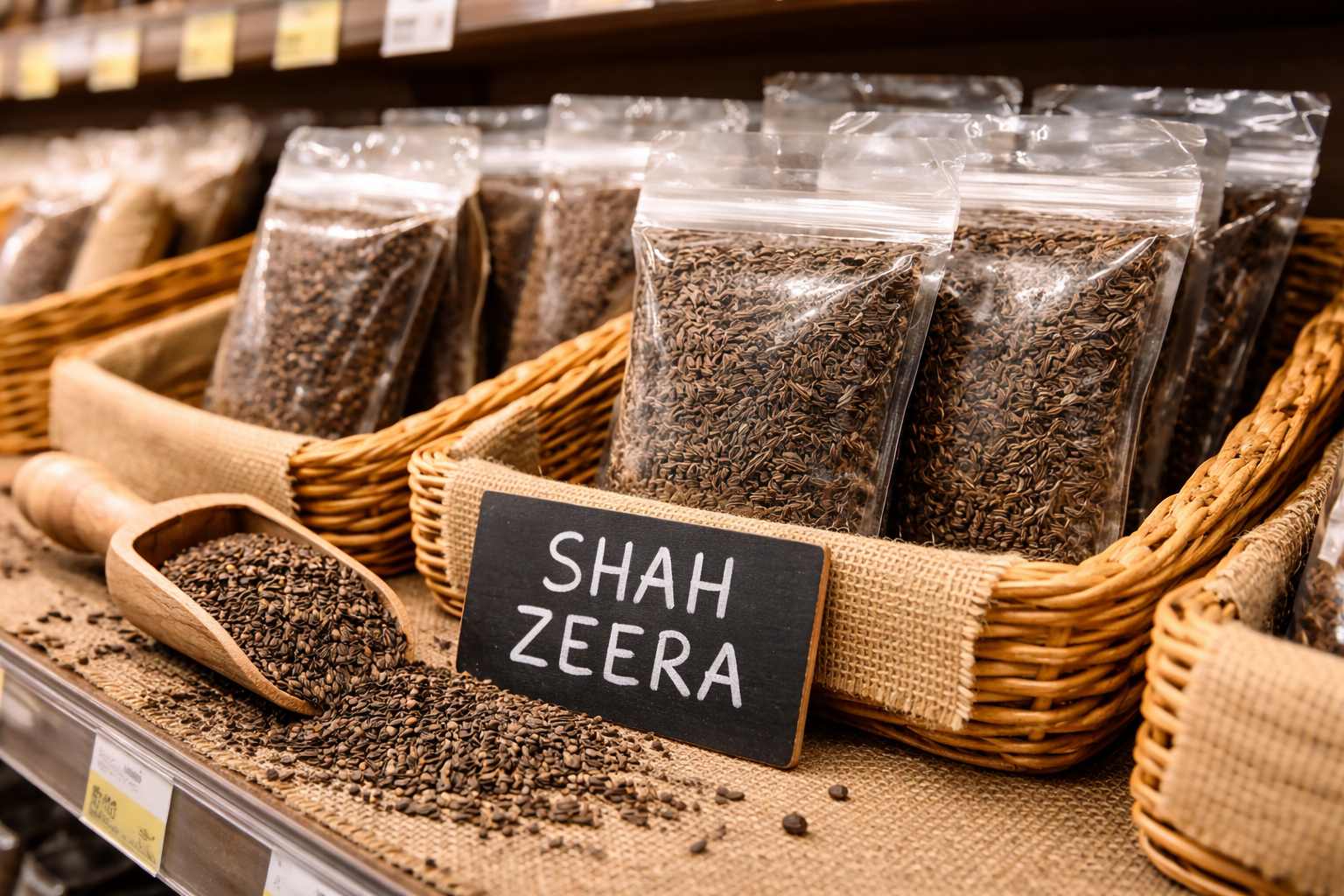
Welcome to the enchanting world of black cumin seeds, known as shah zeera or kala jeera in South Asia. These tiny, slender, jet-black seeds originate from the Bunium persicum plant and offer a unique flavor profile that sets them apart from common cumin. With their delicate yet complex aroma, shah zeera tantalizes the palate with earthy sweetness and subtle notes reminiscent of caraway and anise. Renowned as the royal cumin in Indian, Persian, and Central Asian cuisines, these seeds promise to elevate your culinary creations and deepen your appreciation for their exquisite qualities.
In this blog post, we will explore the culinary delights of black cumin seeds and how they can transform a simple dish into an aromatic masterpiece. From biryanis and rich curries to Mughlai specialties and festive breads, the charm of kala jeera enhances a variety of recipes, making them unforgettable. Beyond their culinary allure, we also delve into the traditional wellness wisdom surrounding black cumin, uncovering the remarkable health benefits that have made shah zeera a cherished ingredient in ancient medicine. Join us on this flavorful journey that highlights the rich heritage and healing properties of these potent seeds.
The enchanting world of black cumin seeds: Exploring shah zeera's unique flavor profile
Black cumin seeds, known as shah zeera or kala jeera in South Asia, captivate the senses with their distinct and alluring flavor profile. Unlike their more common cousin, regular cumin, these slender, jet-black seeds come from the Bunium persicum plant and offer a unique combination of earthy sweetness and aromatic complexity. Their flavor carries subtle notes reminiscent of caraway and anise, accompanied by a mild peppery warmth that intrigues the palate. This sophisticated flavor makes black cumin seeds a favorite spice in diverse cuisines, celebrated for their ability to enhance and complement various dishes.
Chefs and home cooks alike will find that toasting or frying black cumin seeds in ghee elevates their fragrance, unleashing the full spectrum of their aromatic potential. This technique not only intensifies their essence but also adds a warm, nutty undertone to each dish. When incorporated into biryanis, rich curries, Mughlai dishes, and festive breads, shah zeera transforms mundane meals into extraordinary culinary experiences. Each tiny seed infuses dishes with a refined, lingering perfume that delights and enchants, making black cumin an essential spice in a well-stocked kitchen.
Culinary delights: Elevating dishes with the aromatic charm of kala jeera
Black cumin seeds, known as shah zeera, add a distinct flavor and aroma that can transform ordinary dishes into extraordinary culinary experiences. When gently toasted or fried in ghee, these tiny, jet-black seeds release complex fragrances, enhancing the overall taste and aroma of a dish. Chefs often incorporate kala jeera into biryanis, where its subtle notes harmonize with fragrant basmati rice and marinated meats, creating a regal dining experience. Moreover, in rich curries, the earthiness and mild sweetness of shah zeera complement the spices, adding depth and sophistication. Even in festive breads, such as naan or parathas, these seeds infuse each bite with a tantalizing perfume that lingers on the palate.
In addition to traditional Indian and Persian cuisines, black cumin seeds also shine in Central Asian dishes. Think of stews and roasted vegetables, where the mild peppery warmth of kala jeera pairs beautifully with robust flavors. The seeds can even enhance simple salads and dressings, bringing a unique twist to lighter fare. As home cooks and chefs alike embrace the royal status of black cumin in their kitchens, they discover an aromatic charm that not only elevates their dishes but also creates a sensory experience that resonates with the rich culinary heritage of South Asia.
Traditional wisdom: The health benefits of black cumin in ancient medicine
Black cumin seeds, or shah zeera, have long been revered in traditional medicine systems, especially within Ayurvedic practices and Unani medicine. These tiny seeds are believed to possess a wide range of health benefits, making them a staple in natural remedies. Rich in antioxidants, they help combat oxidative stress, promoting overall wellness. The oil extracted from black cumin seeds contains thymoquinone, which has been shown to possess anti-inflammatory and antimicrobial properties. Incorporating these seeds into your diet can enhance immune function, support respiratory health, and even aid in digestion.
Historically, ancient texts document the use of shah zeera for treating ailments such as asthma, allergies, and various gastrointestinal issues. Many traditional healers advocate for its use in alleviating symptoms of colds and flu, attributing its antibacterial properties to the prevention of infections. Furthermore, black cumin seeds are often employed to regulate blood sugar levels and support metabolic health. By integrating these potent seeds into contemporary diets, one can honor centuries of culinary and medicinal wisdom, transforming each meal into a nourishing experience steeped in tradition.