
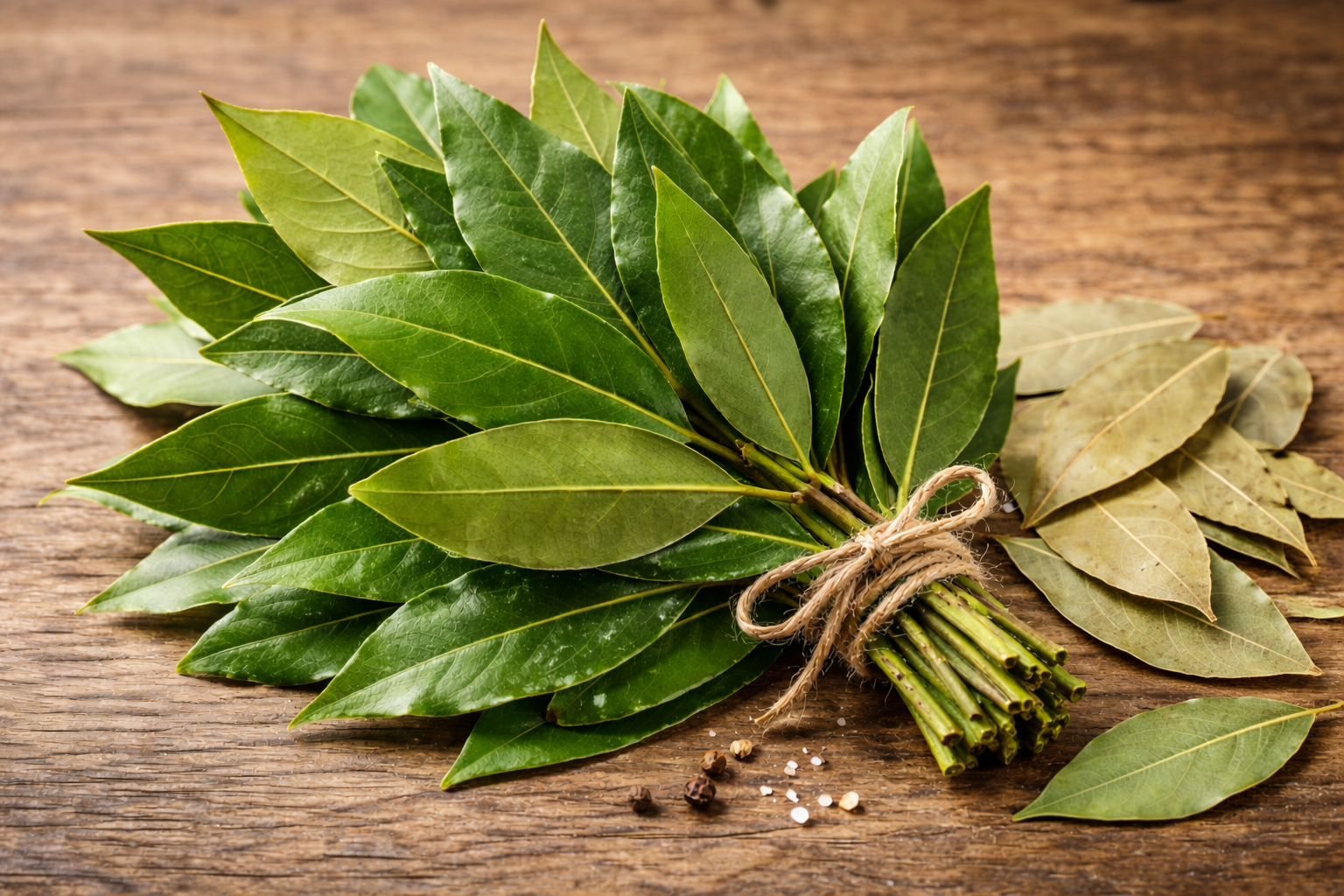
Bay leaves are the aromatic, elliptical leaves of the bay laurel tree, cherished for their subtle yet complex flavor profile—a delightful blend of herbal, slightly floral, and faintly peppery notes with just a whisper of menthol. While these sturdy leaves are often used in their dried form, they rarely make an appearance on the dinner plate as a whole. Instead, they work quietly behind the scenes, infusing soups, stews, sauces, and biryanis with their earthy depth, enhancing your favorite dishes in a truly magical way. As a staple in Mediterranean, Indian, and American cuisines, bay leaves effortlessly soften and round out flavors, transforming everyday meals into culinary masterpieces.
Beyond their culinary applications, bay leaves carry a rich history steeped in symbolism and tradition. Since ancient times, they have served as emblems of victory, wisdom, and achievement, linking the world of cooking with cultural significance. This humble leaf bridges the gap between kitchen and culture, inspiring chefs and home cooks alike to appreciate its warm, soothing fragrance and the subtle magic it brings. Join us as we explore the enchanting flavor profile of bay leaves, their diverse culinary uses, and the fascinating history that has elevated them from simple ingredients to symbols of triumph.
The enchanting flavor profile of bay leaves: a culinary treasure
Bay leaves are the aromatic, elliptical leaves of the bay laurel tree, celebrated for their complex flavor profile that enhances a variety of dishes. Their subtle blend of herbal, slightly floral, and faintly peppery notes brings an intriguing depth to culinary creations. When used in cooking, these leaves impart a gentle, earthy essence that rounds out flavors without overwhelming the palate. As they simmer in soups, stews, and sauces, they release their enchanting aroma, creating a fragrant backdrop that elevates even the simplest of meals.
This unique flavor combination makes bay leaves a versatile ingredient in many cuisines. Their ability to harmonize with both robust and delicate flavors allows them to shine in Mediterranean dishes, Indian curries, and American comfort food alike. Cooks treasure bay leaves for their understated elegance; they work quietly yet effectively to bring a layer of sophistication to every bite. Although most commonly used in their dried form, their flavor potential remains a culinary secret waiting to be unlocked in kitchens around the world.
Culinary uses of bay leaves: infusing depth in your favorite dishes
Bay leaves shine as a key ingredient in various cuisines, enhancing the character of soups, stews, sauces, and biryanis. When simmered, these aromatic leaves release their complex flavor profile, adding a subtle herbal note that complements a wide range of ingredients. Whether you toss a couple into a pot of simmering lentil soup or include them in a rich tomato sauce, bay leaves work tirelessly in the background, softening and rounding out the overall flavor without overwhelming the dish. The result is a beautifully balanced meal that tantalizes the palate and invites the eater to savor every bite.
To maximize the benefits of bay leaves in your cooking, it’s essential to remember that they are best used dried. Fresh bay leaves can be much less potent, so opt for dried leaves to achieve that sought-after earthy depth. As you incorporate them into your favorite recipes, make sure to remove the leaves before serving, as they remain tough and inedible. By harnessing the unique qualities of bay leaves, you can elevate your culinary creations, transforming everyday dishes into memorable dining experiences.
The rich history and symbolism of bay leaves: from ancient wisdom to modern kitchens
Bay leaves have woven their way through the tapestry of human history, symbolizing victory and wisdom long before they found their place in our kitchens. Ancient Greeks crowned their athletes and poets with bay laurel wreaths, celebrating their achievements and bestowing honor upon them. This practice inspired the term “laureate,” indicating someone who has been honored for their accomplishments. Throughout various cultures, bay leaves have represented triumph and success, reminding us that humble ingredients can carry profound meanings and traditions.
In modern times, the allure of bay leaves extends beyond their culinary contributions. As their aroma wafts through homes, they evoke a sense of comfort and warmth, creating a connection to the past. Many chefs and home cooks recognize the powerful yet subtle presence of bay leaves in their dishes, finding inspiration in both their flavor and historical significance. By incorporating bay leaves into daily cooking, we not only enhance our meals but also pay homage to the legacy of this aromatic leaf, bridging the gap between ancient wisdom and contemporary gastronomy.